

Complaints
Intercostal muscle problems
Intercostal muscle problems are problems of the intercostal muscles, the small muscles between your ribs. You feel a sharp or stabbing pain in your side when breathing deeply, coughing, sneezing or twisting. The symptoms often develop after a sudden twisting movement, a period of heavy coughing or a sport with a lot of rotation. At De Fysio Man, we help you breathe and move freely again.
Intercostal muscle problems: what causes them?
The intercostal muscles lie in three layers between your ribs: the external, internal and innermost intercostal muscles. They help with breathing by lifting and lowering the ribs. They also stabilise your ribcage when twisting and bending sideways. Along the lower edge of each rib runs an intercostal nerve with blood vessels. With intercostal muscle problems, an intercostal muscle is overloaded, strained or under increased tension.
A strain often develops from a sudden, forceful twist or stretch of the trunk. Think of golf, tennis, padel, rowing, throwing or lifting above your head. A period of heavy coughing, for example with flu or bronchitis, can also overload the intercostal muscles. Risk factors are a stiff mid-back, building up training too quickly, a one-sided working posture and high breathing when tense. A blow or fall onto your side can also bruise the muscles.
Types of intercostal muscle problems
- Acute strain: a sudden, sharp pain during a movement. With a mild strain, a few muscle fibres are overstretched; with a more severe strain, part of the muscle is torn.
- Overload from coughing: gradually increasing pain between the ribs after days or weeks of frequent coughing.
- Bruising: pain and sometimes a bruise after a blow or fall onto the ribs.
- Muscle tension and trigger points: a nagging pain from long-term tension, for example from a hunched working posture or high breathing.
Pain between the ribs: recognise the signs
You mainly notice an irritated intercostal muscle when breathing and moving. Typical signs are:
- A sharp or stabbing pain between the ribs on the side of your trunk.
- Pain when you breathe in deeply, cough, sneeze or laugh.
- Pain when twisting, bending sideways or reaching up.
- A tender spot when you press between two ribs.
- Shallow breathing because a deep sigh hurts.
- Difficulty lying on the painful side or turning over in bed.
- A tight or cramping feeling in the side after sport.
Do you have pain or pressure in the chest radiating to the arm, jaw or back, do you suddenly become short of breath or do you cough up blood? Call 112 immediately. If the pain started after a fall and you feel something shift or crack, or if you have a fever with a cough, contact your GP. If you see a strip of blisters on your skin a few days after the pain started, it may be shingles and you should also see your GP.
Muscle, rib or nerve? How we determine the cause
Pain between the ribs can come from different structures. With a muscle problem, the pain can be pinpointed between two ribs and increases when you tense the trunk against resistance or stretch the muscle. With a broken or bruised rib, there is often severe tenderness on the rib itself, sometimes with a cracking feeling. Nerve pain between the ribs, intercostal neuralgia, feels more burning or shooting and follows the course of the nerve. Shingles is a well-known cause of this. During the assessment, we combine these features with movement tests, so we know which structure is causing the pain and whether a doctor should take a look first.
Treatment of the intercostal muscles at De Fysio Man
First, we focus on less pain and calm, full breathing. After that, we build up the load capacity of your trunk step by step.
How we work on recovery
- Explanation of the problem and why continuing to breathe and move gently promotes recovery.
- Breathing exercises to let the ribs move freely again, without forcing.
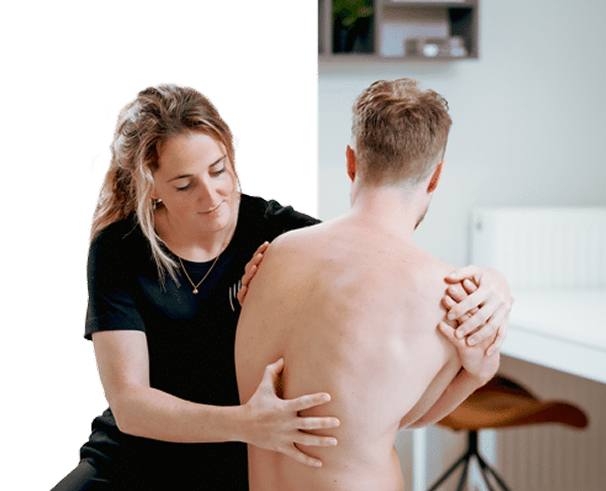
- Trigger point therapy and gentle soft tissue techniques for the tense intercostal and trunk muscles.
- Manual therapy for a stiff mid-back, so the ribs are under less strain.
- Advice to press a cushion against the painful side when coughing and sneezing.
- Gradual build-up of twisting movements and trunk strength.
Back to your sport
Do you play a sport with a lot of twisting, such as golf, tennis or padel? Then we build up the rotation in your training step by step. We also look at your technique and the mobility of your hips and mid-back, so the intercostal muscles do not have to absorb all the rotational force. This way, you return responsibly and reduce the risk of a new strain.
Intercostal muscle problems and rib joint problems
Pain between the ribs does not always come from the muscles. If the pain starts close to your spine and runs along a rib to the side, rib joint problems in the side may be involved. In that case, the connection between rib and vertebra is irritated or stiff. Both problems can also occur together, because a blocked rib puts extra strain on the intercostal muscles. On the page about side complaints, you can read more about other causes of pain in your side.
Preventing recurring intercostal muscle problems
If intercostal muscle problems keep coming back, the load on the intercostal muscles is often structurally too high. This can be due to a stiff mid-back, weak trunk muscles or a fast training build-up. A recurring cough, for example with asthma, can also play a part. In that case, have the cough assessed by your GP. With mobility exercises for the thoracic spine, strength training for the oblique abdominal muscles and a gradual training build-up, you reduce the risk of new problems.
How we work at De Fysio Man
1. Intake and assessment
We discuss how the pain started and whether breathing, coughing or twisting brings it on. We then examine the intercostal muscles, the mobility of the ribs and mid-back and your breathing, and we rule out a rib fracture or other warning signs.
2. Tailored treatment plan
You receive a plan that first focuses on reducing pain and breathing freely, and then on building up trunk strength and twisting movements.
3. Breathing and twisting freely again
We guide you until you can breathe, play sport and sleep without pain again.
Frequently asked questions about intercostal muscle problems
A mild strain of an intercostal muscle usually recovers within one to three weeks. With a more severe strain, recovery can take four to eight weeks. Because you use your intercostal muscles with every breath, recovery can feel slower than with other muscles.
Gentle activity such as walking and cycling can usually simply continue. It is better to temporarily adapt or set aside sports with forceful twisting, such as golf, tennis or rowing. We build up together as soon as you can handle the rotation again, so the muscle does not strain again.
With intercostal muscle problems, the pain is between the ribs on the side, at the location of the muscle, and increases when the muscle contracts or stretches. With rib joint problems, the pain often starts next to the spine and runs along the rib to the side. In the assessment, we test both structures, so it becomes clear what is going on for you.
No, you can come straight to De Fysio Man. If the pain started after a fall, you have a fever or you are coughing a lot, see your GP first. With chest pain and shortness of breath, call 112. Physiotherapy falls under supplementary insurance; you can read how many treatments are reimbursed in the terms of your policy.

Share this article:


Take the first step towards recovery today
Don’t just put up with your symptoms. With a personalised treatment plan, we’ll help you make progress quickly and effectively.

Share this article: