


Complaints
TFCC injury
Do you have pain on the little-finger side of your wrist? Does turning, lifting or bearing weight feel unstable or painful? Do you find that applying force no longer comes naturally? TFCC injuries are common and can have a significant impact on your daily life. Simple tasks such as opening a jar, typing or playing sport can suddenly become a challenge. Fortunately, with a targeted approach, recovery is very much possible.
What is TFCC injury?
Many people wonder what TFCC injury actually is. The TFCC (Triangular Fibrocartilage Complex) is a structure made up of cartilage and ligaments located on the little-finger side of the wrist. It helps keep the wrist stable and allows the forearm and wrist to work together smoothly, especially during rotational movements.
With a TFCC injury in the wrist, this area becomes irritated or damaged. As a result, you may experience pain on the outer side of the wrist, a feeling that the wrist is less stable, and a noticeable loss of strength during daily activities.
TFCC injury symptoms
TFCC injury symptoms can develop gradually due to overuse, but they can also appear suddenly after a fall or twisting injury. The symptoms are usually located on the little-finger side of the wrist and become more noticeable during twisting, weight-bearing or lifting activities.
- Pain on the little-finger side of the wrist, especially during rotation or forceful movements
- An unstable or unreliable feeling when supporting yourself on the hand
- Loss of strength in the hand and wrist, for example when carrying or gripping objects
- A clicking or popping sensation in the wrist
- Increased symptoms after sports or repetitive use
Do you recognise these symptoms? Then it is wise to have your wrist assessed early. Starting treatment sooner can prevent the wrist from becoming increasingly sensitive to load.
TFCC injury in the wrist
TFCC injury wrist complaints are often easy to identify because the pain is typically located on the outer side of the wrist. Many people notice symptoms when turning a key, using a door handle, doing push-ups or carrying shopping bags. Because the TFCC plays an important role in wrist stability, the wrist may feel not only painful but also unreliable.
How does a TFCC injury develop?
A TFCC injury often develops through a combination of a vulnerable moment and repeated loading. Falling on an outstretched hand is a common cause. However, prolonged or repetitive loading can also irritate the TFCC, especially if you frequently rotate the wrist or place weight through it.
- Falling on an outstretched hand
- Twisting the wrist during sports or work activities
- Repeated lifting, pushing or pulling with the hand
- Frequent weight-bearing activities such as fitness training or yoga
- Long-term overuse or insufficient recovery time
In many cases, there is not one single cause but rather a combination of factors. That is why it is important not only to reduce pain but also to understand why the wrist continues to exceed its limits.
What can you do yourself?
When symptoms first develop, it is important to give the wrist some rest without completely immobilising it. Avoiding all movement can actually make the wrist stiffer and weaker. The goal is to continue using the wrist within a safe and manageable pain range.
- Temporarily reduce heavy loading and rotational movements
- Avoid supporting your body weight on the hand if it causes pain
- Alternate tasks and schedule short recovery periods
- Consider using a brace during heavier activities
- Continue performing light, pain-free movements to prevent stiffness
If symptoms continue to return or become worse, professional guidance is recommended.
Exercises for TFCC injury
Effective TFCC injury exercises focus on control, stability and gradually rebuilding load tolerance. The goal is to restore confidence in wrist movement without aggravating the TFCC.
Example of a gentle starting exercise
- Place your forearm on a table with your hand hanging over the edge
- Slowly make a fist and then straighten your fingers
- Keep the movement small and controlled
- Repeat 10 to 15 times
These exercises should not cause sharp pain. Mild sensitivity is acceptable, but the wrist should feel calmer afterwards, not more irritated.
TFCC injury treatment
The most appropriate TFCC injury treatment depends on how long you have had symptoms, the underlying cause and how much stress is placed on the wrist during daily life. Treatment generally focuses on reducing irritation, improving stability and rebuilding strength and control.
In many cases, rest alone is not enough. Without a structured rehabilitation programme, the wrist often remains vulnerable and symptoms may return as soon as activity levels increase.
TFCC injury treatment at De Fysio Man
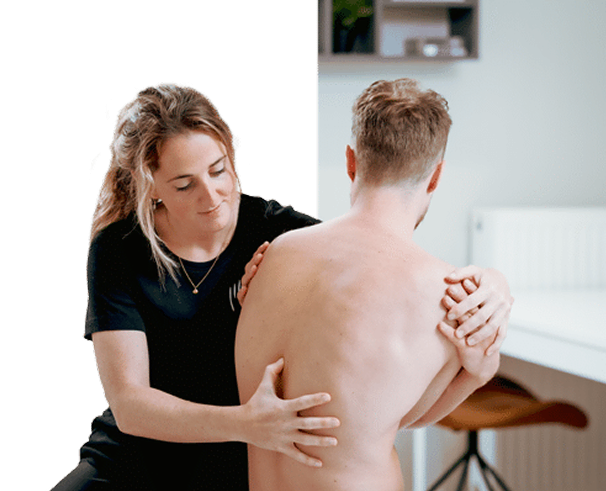
At De Fysio Man, we start with a thorough assessment of your symptoms. We examine not only the wrist but also the forearm, elbow and shoulder. Physiotherapy for TFCC injuries focuses on the entire movement chain. If loading patterns or movement techniques are incorrect, the wrist is likely to become overloaded again.
During the assessment, we evaluate:
- The location and pattern of your pain
- Wrist stability and load tolerance
- Mobility of the wrist and forearm
- Strength and control of the hand and forearm muscles
- Physical demands at work, during sports and in daily life
Based on our findings, your treatment plan may include:
- Stability training and progressive strength development
- Exercises to improve coordination and wrist control
- Joint mobilisation when stiffness is present
- Practical advice on managing and modifying load
Taping for TFCC injury
Taping can provide temporary support, particularly if your wrist feels unstable or painful during certain movements. It may help reduce symptoms during work or sports activities. However, taping is only a supportive tool and works best when combined with exercise and rehabilitation. Ultimately, the goal is for your wrist to regain its own stability and strength.
Rehabilitation phases
Phase 1: Reducing pain and irritation
We begin by reducing wrist loading, establishing clear pain guidelines and introducing exercises that activate the wrist without causing irritation.
Phase 2: Building stability and strength
The wrist is gradually strengthened through controlled exercises. We focus on improving control, stability and strength so the TFCC can tolerate loading with confidence again.
Phase 3: Returning to work and sports
We progressively reintroduce the specific movements you need for your daily activities, such as lifting, weight-bearing, pushing and rotating, without triggering a return of symptoms.
Your next step
Do not continue living with wrist pain or instability. The earlier you start the right treatment, the greater your chances of achieving a full recovery and restoring confidence in wrist movement.
Schedule an appointment with De Fysio Man today and work with us towards a strong and stable wrist.
Frequently Asked Questions
Sometimes minor symptoms improve with rest. However, if you then resume normal use of your wrist without gradually building up your activity levels, the symptoms often return. Targeted guidance and a gradual return to activity usually lead to a faster and more stable recovery.
A common symptom is pain on the little-finger side of the wrist, particularly when turning, lifting or putting weight on it. You may sometimes feel a clicking sensation or a feeling of instability. If you’re unsure, get it checked out.
Yes. Physiotherapy for TFCC injuries focuses on reducing irritation and improving stability, strength and control. This helps to reduce the likelihood of symptoms recurring.
If your symptoms persist for more than a few weeks, if your wrist feels unstable, or if you notice a clear loss of strength. It is also advisable to seek help if you experience pain at night or if everyday tasks become increasingly difficult.
That depends on the cause and the severity. Usually, a combination of advice on reducing strain, stability training and targeted exercises is most effective. Sometimes, temporary taping or a brace can provide support.

Share this article:


Take the first step towards recovery today
Do not continue to endure discomfort. With a personalised treatment plan, we can assist you in making rapid and effective progress.

Share this article: