

Complaints
RSI in the forearm
Does your forearm tingle at the end of the working day? Does typing or clicking feel more strenuous than it did a few months ago? Do you experience a nagging pain in the evening that just won’t go away? RSI in the forearm creeps up on you. It starts small, you ignore it, and before you know it, you can’t even hold a cup of coffee without it stinging. With the right approach, recovery is certainly possible, but waiting almost always makes it worse.
What is RSI in the forearm?
RSI stands for Repetitive Strain Injury, also known as CANS (Complaints of Arm, Neck and Shoulder). It is a collective term for complaints that develop due to repeated strain on the muscles, tendons and nerves in the arm. The forearm contains many small muscles that control your wrist, hand and fingers. When you spend hours typing, scrolling, gaming or performing detailed handwork, these muscles get very little rest and eventually start to react.
Common symptoms
- A dull or burning pain in the forearm, especially at the end of the day
- Tingling or numbness in the fingers
- Loss of strength in the wrist and hand, making everyday tasks feel heavier
- Stiffness in the wrist when waking up
- Pain that increases when typing, clicking or holding a phone
- A pulling sensation on the inside or outside of the elbow (tennis elbow or golfer’s elbow)
- Symptoms that persist even after work has finished
Do you recognise these symptoms? Don’t wait until you can no longer use your arm properly. The sooner you take action, the faster your recovery.
Causes and risk factors
RSI does not develop overnight. In almost all cases, it is the result of a combination of factors that gradually build up over months.
Long periods of screen time with very few breaks are one of the biggest causes. Typing for eight hours a day without regular breaks puts strain on your forearm that the human body was never designed for. Add a mouse positioned too far away, a keyboard at the wrong height, prolonged phone use or a working posture with elevated shoulders, and the forearm eventually becomes overloaded.
Other factors we frequently see include:
- Tight neck and shoulder muscles that irritate nerves running into the forearm
- Stress and mental tension that keep muscle tension elevated
- Lack of sleep, reducing the body’s ability to recover
- Sports that heavily load the forearm, such as climbing, strength training or racket sports
- Hobbies involving repetitive hand movements, such as painting, crocheting or gaming
- A previous wrist, elbow or shoulder injury that never fully recovered
We have seen a noticeable increase in RSI complaints in recent years, especially since working from home became more common. A kitchen table simply is not an ergonomic workstation, no matter how comfortable it may seem.
Forearm versus elbow versus wrist
Not every RSI complaint originates from the same location, and that makes a big difference for treatment.
Pain in the middle of the forearm is often related to overworked muscles that control the fingers and wrist. Pain around the elbow is more commonly associated with tennis elbow or golfer’s elbow, where muscle attachments become irritated. Pain in the wrist or hand may be linked to carpal tunnel syndrome, where a nerve becomes compressed. We always look at where the pain is located and, just as importantly, where it is coming from.
What you can do yourself
- Take a one-minute microbreak every 30 to 45 minutes, even if it feels unnecessary
- Perform gentle wrist circles and finger stretches regularly
- Check your workstation setup: screen at eye level, elbows at 90 degrees and mouse within easy reach
- Alternate typing with other tasks instead of staying in the same position for hours
- Use your phone less with one hand and stretch your arm regularly
- Apply heat for stiffness and cooling if the pain feels sharp or burning
- Temporarily reduce activities that clearly aggravate symptoms while staying active
- If symptoms persist despite these adjustments, schedule an assessment
These steps help improve circulation in the forearm and give overloaded tissues a chance to recover. To be honest, microbreaks may be the least exciting advice we give, but they are often more effective than any gadget or tool.
Assessment and treatment plan at De Fysio Man
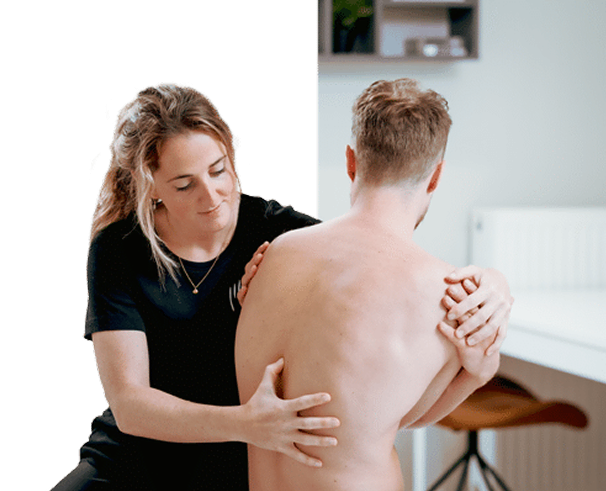
We start by listening to your story, your work demands and your daily routine. We assess strength in the wrist and forearm, mobility of the neck, shoulder and elbow, and examine how your entire movement chain functions. We determine whether the complaint originates in the forearm itself or is being driven by the neck or shoulder. Based on this, we create a treatment plan tailored specifically to you.
- Targeted exercise therapy with progression from isometric to dynamic loading and eventually full functional loading
- Mobilisation of the wrist, elbow, shoulder and neck where necessary
- Trigger point therapy and soft tissue techniques for tight forearm muscles
- Ergonomic advice for your workstation, sometimes including a video analysis of your working posture
- Taping as a temporary support tool for acute symptoms
- Relaxation exercises, as tension in the head and neck often affects the forearm
- Assessment of wrist braces or ergonomic equipment when appropriate
Forearm massage can provide temporary relief and is something we regularly use during treatment sessions. However, massage alone does not solve RSI. Building resilience and improving daily habits remain the key to long-term recovery.
Rehabilitation phases
Phase 1: Rest and pain reduction
We reduce pain by adjusting load and giving your body the opportunity to calm down. Complete rest is rarely the answer, as inactivity often worsens RSI. Instead, we focus on smarter load management, short exercises and ergonomic adjustments.
Phase 2: Mobility and activation
Once pain is under control, we improve mobility in the wrist, elbow, shoulder and neck. We activate muscles that are underperforming, often the shoulder blade stabilisers and deep neck muscles, while reducing tension in overactive muscles.
Phase 3: Building strength
We gradually increase the load on the forearm through specific strengthening exercises. Grip exercises, resisted wrist movements and forearm rotations are introduced. The goal is not only pain reduction but also restoring tissue capacity.
Phase 4: Return to full activity
You gradually return to work, sports and hobbies. Activities such as typing, gaming, climbing or other forearm-intensive tasks are carefully reintroduced. If symptoms flare up the following day, the programme is adjusted. The goal is not simply to eliminate pain but to return to full function without recurring symptoms.
What if recovery takes longer?
Some people wait months or even years before seeking help. While this can make recovery more challenging, it is rarely hopeless. The longer symptoms persist, the more the body adapts with protective movement patterns. People often compensate without realising it, placing extra strain on other muscles and joints. This is exactly why a structured rehabilitation programme is so valuable.
If we suspect conditions such as carpal tunnel syndrome, tennis elbow, golfer’s elbow or bursitis, we may recommend additional assessment and adapt treatment accordingly. We also support recovery following injections or surgery when necessary.
Prevention and avoiding recurrence
Without changing the habits that caused the problem, RSI often returns. That is an important reality to acknowledge from the start.
- Schedule regular microbreaks throughout your day
- Alternate tasks instead of typing continuously for hours
- Invest in a proper workstation setup
- Stay physically active, even a short daily walk helps
- Keep your neck and shoulders mobile with a simple morning routine
- Prioritise sleep, as recovery takes place during the night
- Pay attention to early warning signs rather than ignoring them
Your next step
Do not continue living with pain that makes daily life increasingly difficult. RSI-related forearm complaints rarely disappear on their own. The sooner you take action, the sooner you can return to work, sport and daily activities without persistent discomfort. With an accurate diagnosis and a treatment plan tailored to your situation, recovery is absolutely possible. Schedule an appointment with De Fysio Man today.
Overdag dempt je dagelijkse activiteit het signaal. Als je ‘s avonds tot rust komt, voelt je lichaam ineens wat het de hele dag heeft moeten doorstaan. Slechte slaaphoudingen, zoals slapen met je pols gebogen, kunnen klachten ook verergeren.
Een polsbrace kan tijdelijk verlichting geven, vooral ‘s nachts of bij specifieke activiteiten. Maar een brace dag in dag uit dragen verzwakt juist de spieren die je nodig hebt voor herstel. Gebruik hem gericht, niet als standaard.
Meestal wel, maar slimmer. Korte sessies, frequente pauzes, ergonomische aanpassingen. Volledig stoppen met typen werkt voor de meeste mensen niet, en is ook bijna nooit nodig.
Eerlijk antwoord: het ligt sterk aan hoe lang je klachten al hebt en hoeveel je bereid bent aan te passen. Bij vroege klachten van een paar weken praten we vaak over 4 tot 8 weken. Bij langer bestaande klachten kan het 3 tot 6 maanden duren. Wie consequent zijn werkplek en gewoontes verandert, herstelt veel sneller dan wie alleen op oefeningen rekent.
Niet helemaal. Een tennisarm is een specifieke vorm van peesoverbelasting aan de buitenzijde van de elleboog. RSI is een breder begrip dat klachten in pols, onderarm, elleboog, schouder en nek kan omvatten. Een tennisarm is dus een vorm van RSI, maar niet alle RSI is een tennisarm.

Share this article:


Take the first step towards recovery today
Do not continue to endure discomfort. With a personalised treatment plan, we can assist you in making rapid and effective progress.

Share this article: