
Physical complaints
Sports injury
Do you experience pain in your groin during or after exercise? Do you feel a sharp, stabbing or nagging pain when sprinting, pushing off, turning or kicking? And do you notice that training, playing matches or even walking normally causes discomfort? Then you are probably wondering: do I have a sports groin injury and how can I get rid of it? A sports groin is common among athletes and has a significant impact on your performance and daily functioning. The groin region plays a major role in strength, stability and control of the hips and torso. As soon as something goes wrong there, you notice it almost immediately during explosive movements. Fortunately, with the right explanation, treatment and guidance, recovery from a sports groin is possible in many cases.
What happens with a sports hernia?
With a sports hernia, there is overuse or irritation of structures in the groin region. This includes the adductor muscles, abdominal muscles, tendon attachments and the area around the pubic bone. These structures work closely together during sprinting, cutting and pushing off.
The complaints often develop due to repeated explosive loading or an imbalance between strength and control. This commonly occurs in sports such as football, hockey, tennis or other sports with frequent rotational movements.
As a result of this overuse, the following may occur:
- pain in or around the groin during physical activity
- a pulling or sharp sensation during explosive movements
- loss of strength and stability in the hip and core
The body tries to recover on its own, but this requires time, targeted training and a well-structured progression.
What does a sports hernia feel like?
A sports hernia often feels different from a regular muscle strain. Many athletes are unsure whether the pain originates from the groin, abdomen or hip. This is understandable, as these areas work closely together.
With a sports hernia, people often experience:
- deep pain in the groin or around the pubic bone
- symptoms that worsen during sprinting, kicking or twisting
- an unstable or insecure feeling when pushing off
- pain that decreases with rest but returns during sport
Many athletes report that they no longer feel confident moving at full intensity.
What does a sports hernia look like?
A sports hernia is usually not visible on the outside. There is rarely bruising or obvious swelling.
However, you may notice:
- local tenderness when pressing on the groin area
- pain when contracting the abdominal or groin muscles
- stiffness or tension after activity
The symptoms are usually located deep in the groin and are often only noticeable during specific movements.
When does a sports hernia develop?
A sports hernia often develops after:
- repeated sprinting and explosive push-offs
- high-speed turning and cutting movements
- a rapid increase in training load or insufficient recovery time
- reduced core strength or hip stability
Sometimes the symptoms start mildly but gradually worsen. This is an important signal not to continue training through the pain.
Recovery from a sports hernia
Recovery from a sports hernia is not about complete rest, but about targeted and controlled loading. Continuing too quickly increases the risk of long-term complaints, while doing too little leads to loss of strength and control.
Many athletes notice:
- stiffness after rest
- insecurity during explosive actions
- recurring pain when returning too quickly
With the right guidance, recovery is often faster and the risk of recurrence is reduced.
Exercises for a sports hernia
Effective exercises are essential to:
- build strength in the groin and core
- improve hip and pelvic stability
- restore confidence in movement
Exercises are built up step by step. Control and tension come first, followed later by speed and explosiveness. Progressing too quickly increases the risk of recurring symptoms.
Tips for a sports hernia
Some important tips:
- do not force painful movements
- gradually build up sports load
- pay attention to post-exercise pain
- combine strength with control and stability
Recovery is not a sprint, but a process.
Treatment at De Fysio Man
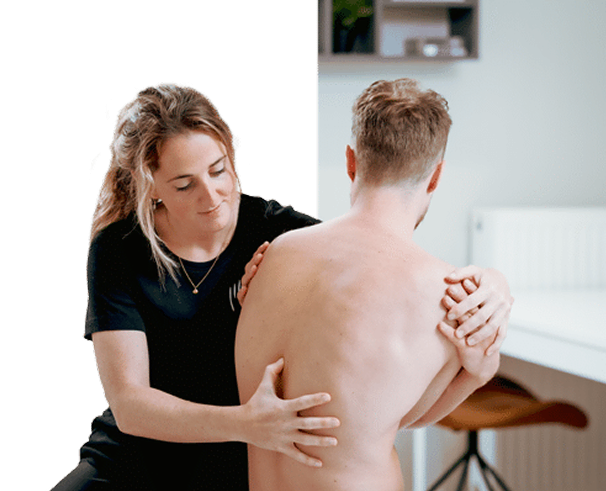
At De Fysio Man, we guide you through the full recovery process from a sports hernia. We do not only focus on the groin, but on your overall movement patterns, sports load and recovery.

Share this article:


Take the first step towards recovery today
Do not continue to endure discomfort. With a personalised treatment plan, we can assist you in making rapid and effective progress.
Schedule your intakeShare this article: